EDUCATIONAL CENTER, ABIA STATE
12/2015
TYPE
INSTITUTIONAL
CLIENT
ABIA STATE GOVERNMENT
SERVICES PROVIDED
CONCEPTUAL DESIGN
EDUCATIONAL CENTER, ABIA STATE
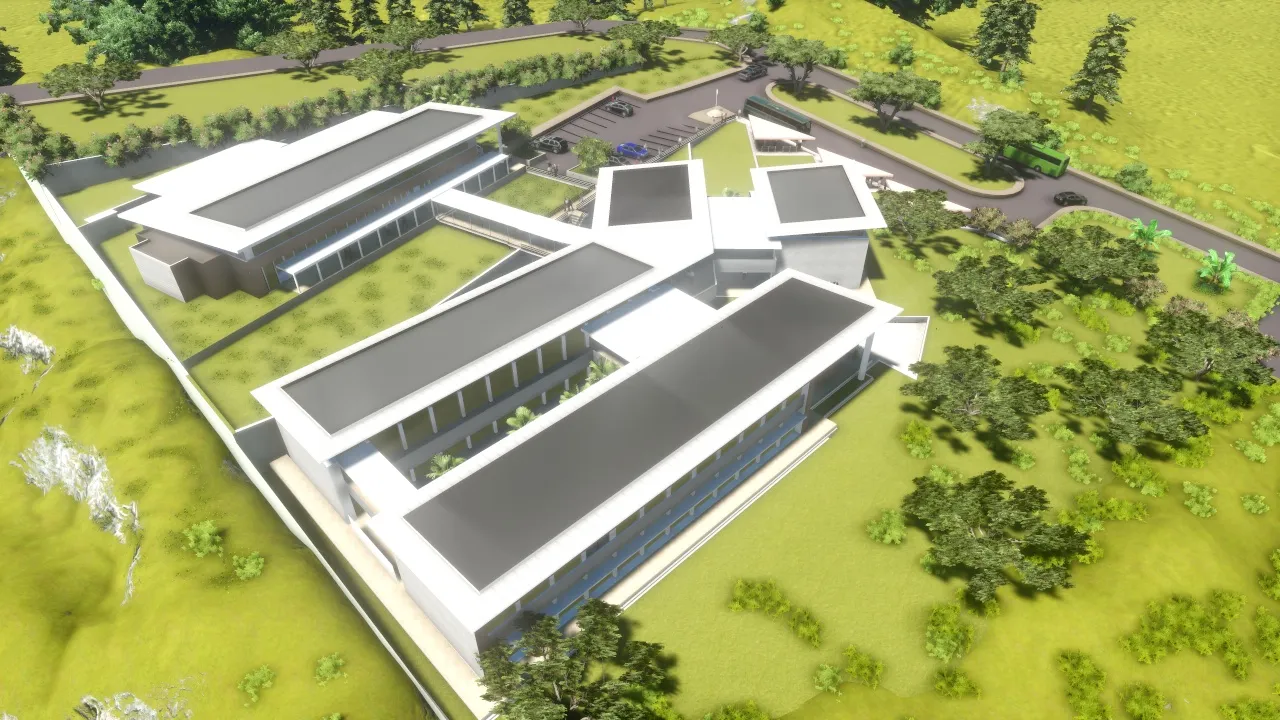
Part of the client’s requirement is to develop an education center that will perform the functions such as academics, Computer Learning, E-learning (link with the world’s education opportunities), Entrepreneurial & Vocational Training, Sustainable Agriculture, Alternative Energy, Adult Literacy, Medical Clinic, Nutrition and Hygiene training, HIV/AIDS awareness and prevention amongst others. The goal of the education center is contribute towards breaking the cycle of poverty and disease in Nigeria through sustainable education and bringing sustainable opportunities for US Nigeria.
In other to meet up with these requirements, DesignGene Architects have considered: Creating a sustainable Power generation, building a sustainable water restoration and health maintenance. Harvesting food and Water in a sustainable way, creating an environment where people can read and learn.
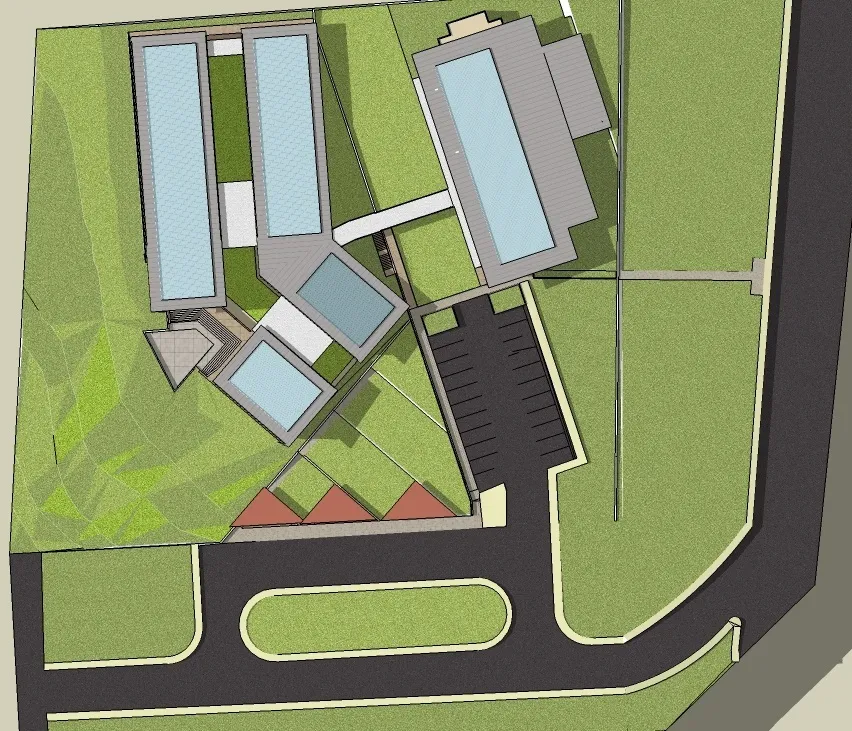
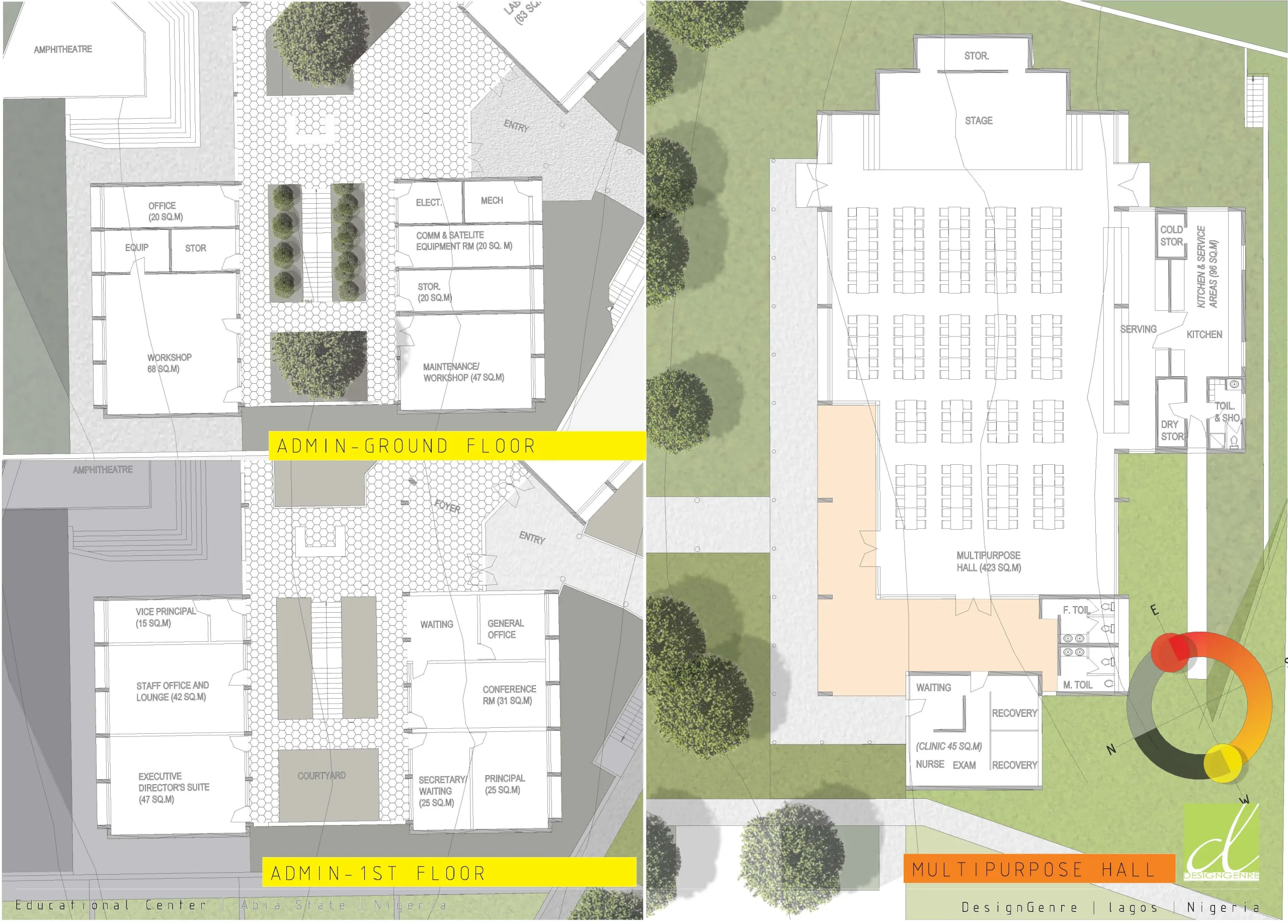
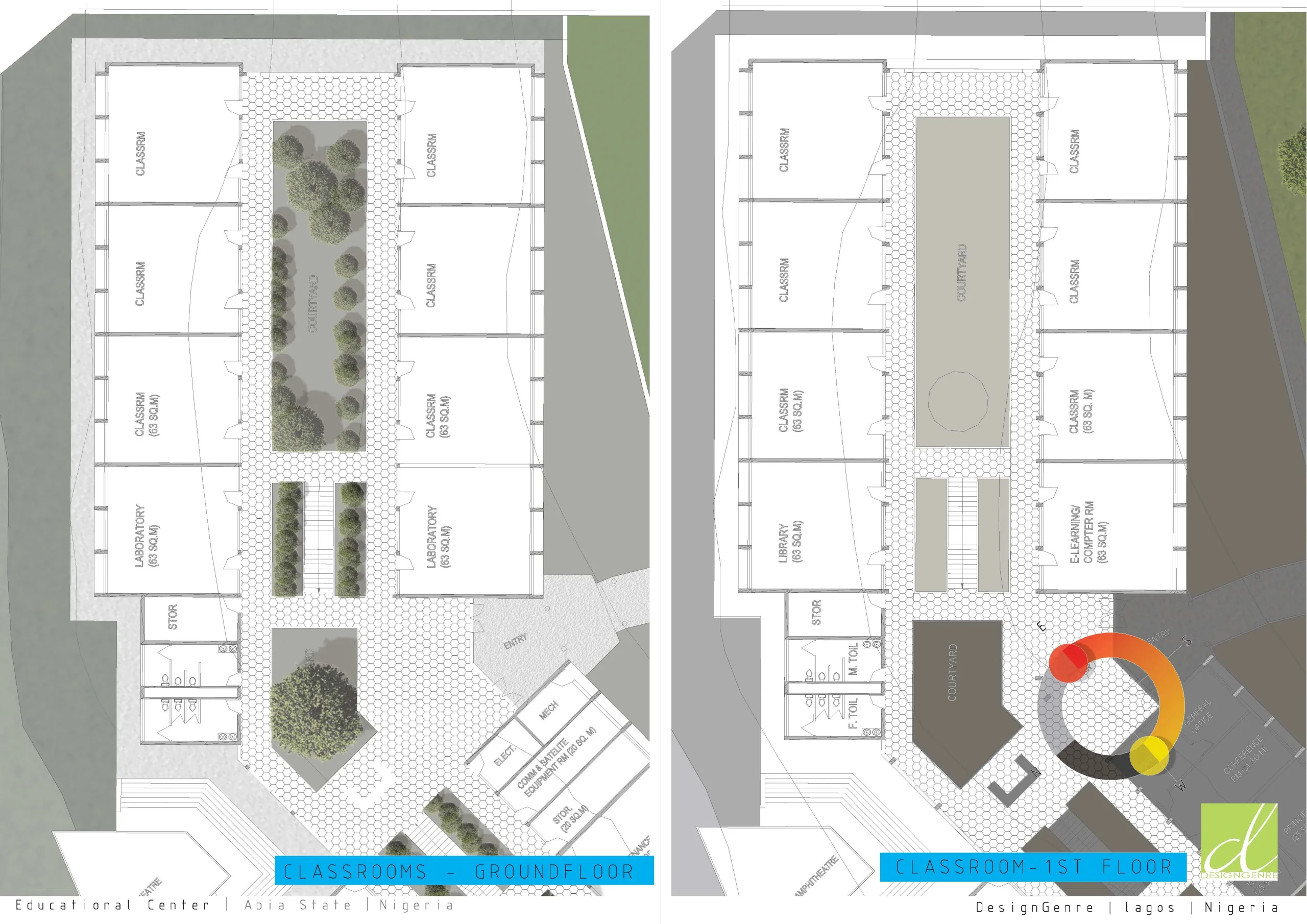
The design comprises 16 Classrooms (45 sq.m each), Multipurpose Hall (130 sq.m), Laboratory (54 sq.m), E-learning/Computer Room (54 sq.m), Principal’s Office (18 sq.m), Principal’s Secretary (12 sq.m), Vice Principal’s Office (15 sq.m), Executive Director Suite (20.5 sq.m) Communication & Satellite Equipment Room (11 sq.m), Storage (16 sq.m), Office & Lounge (38 sq.m), Kitchen (15 sq.m), Clinic (39 sq.m), Toilet/Showers (62 sq.m). Due consideration were given to passive solar design, rain water collection, storage and purification, wells and borehole creation, waste recycling and reuse, adequate orientation of the building form.
EDUCATIONAL CENTER, ABIA STATE
Key challenges and solutions
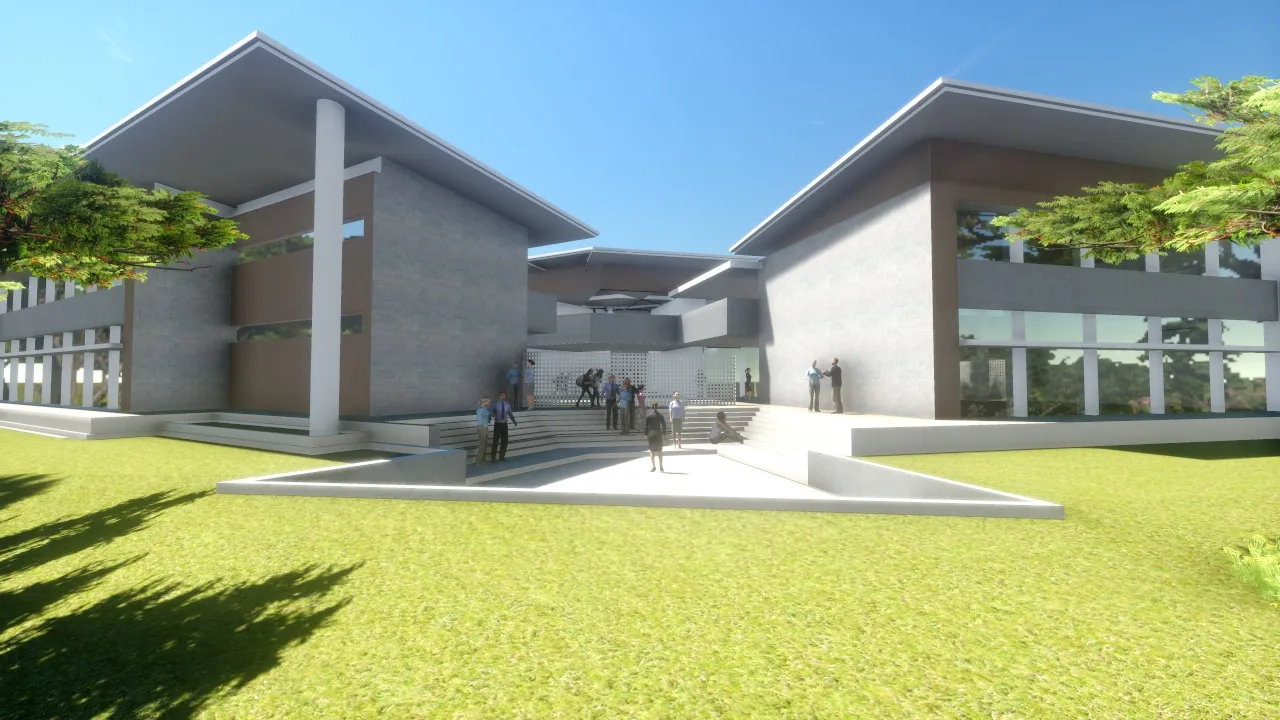
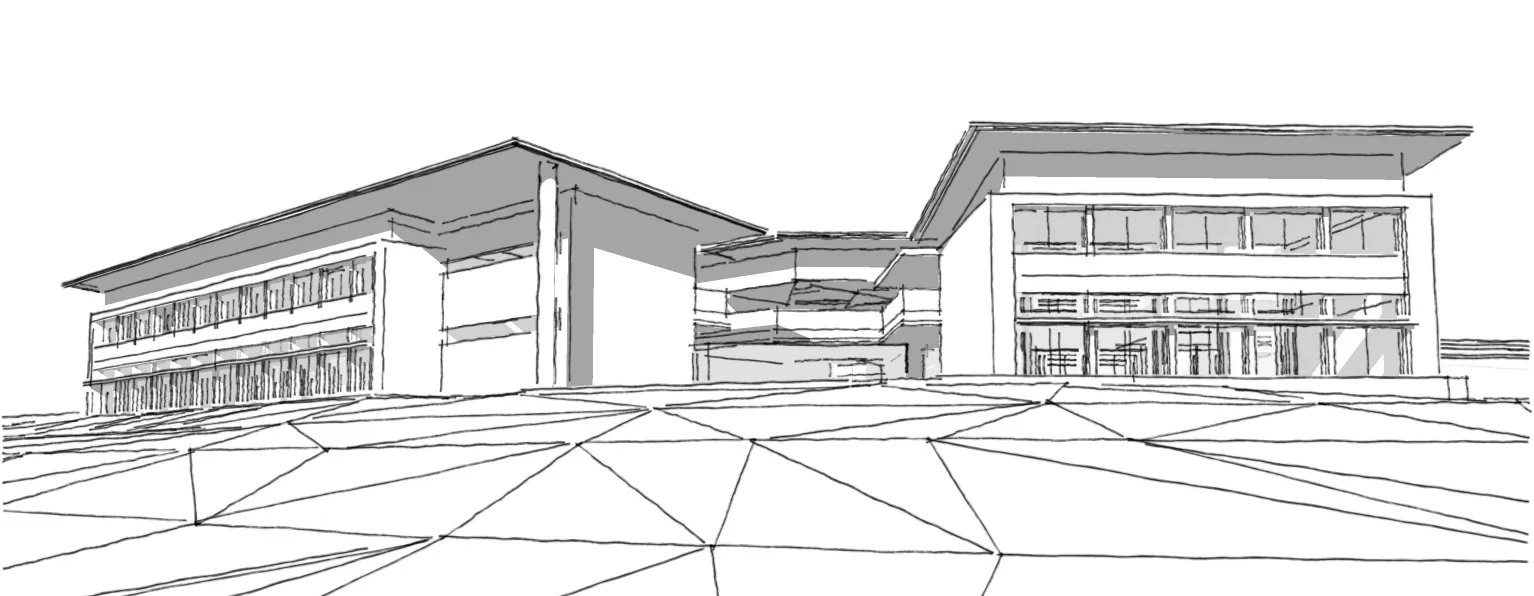
A major challenge was to orient the building in such a way as to take advantage of the climate and not to be over exposed to the elements of weather. A solution was to design the Windows to open to the North – South direction not East – West, building was oriented to capture the Southwest – Northeast winds. Provision was made for Roof Vents (Ventilation), Sun Shading to prototype deep Eaves.
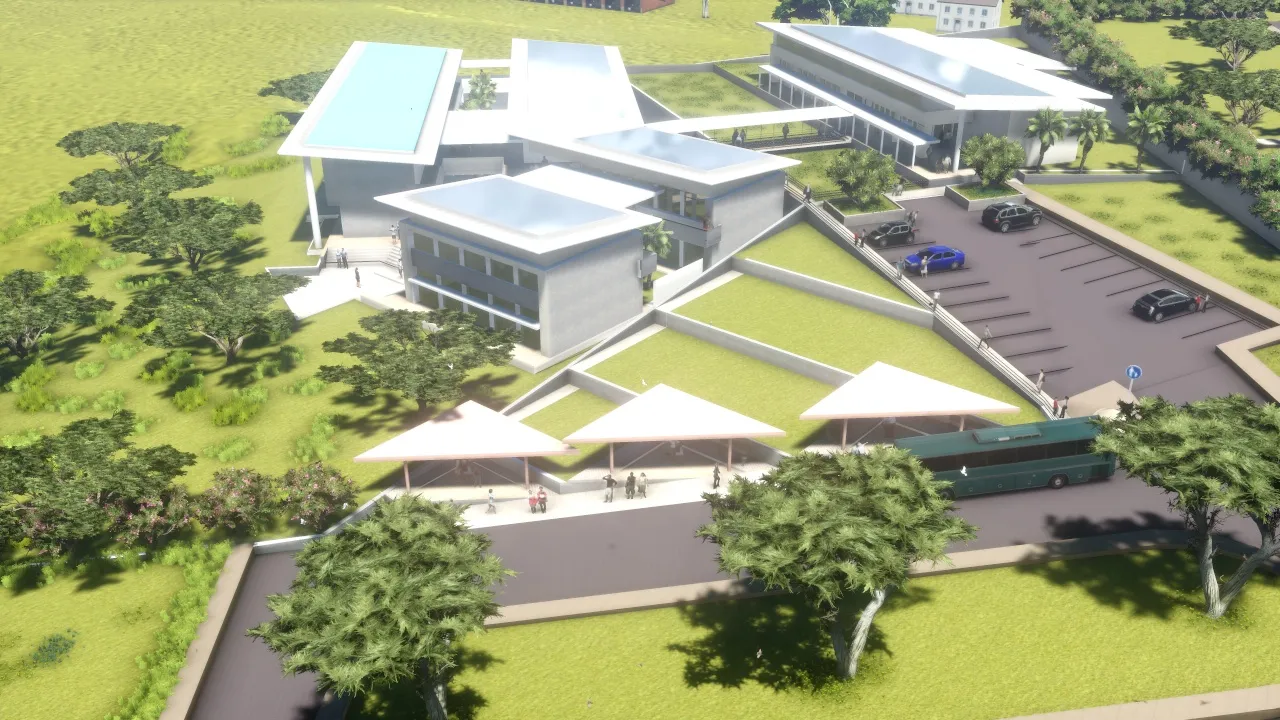
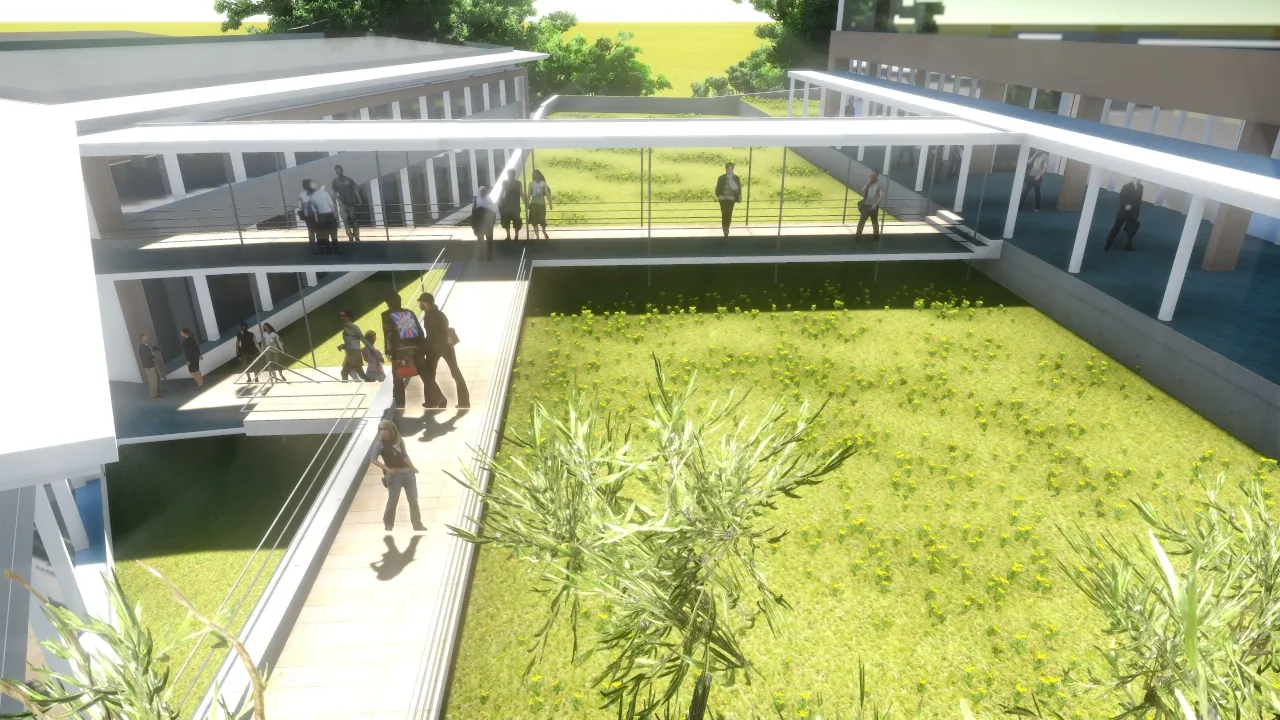
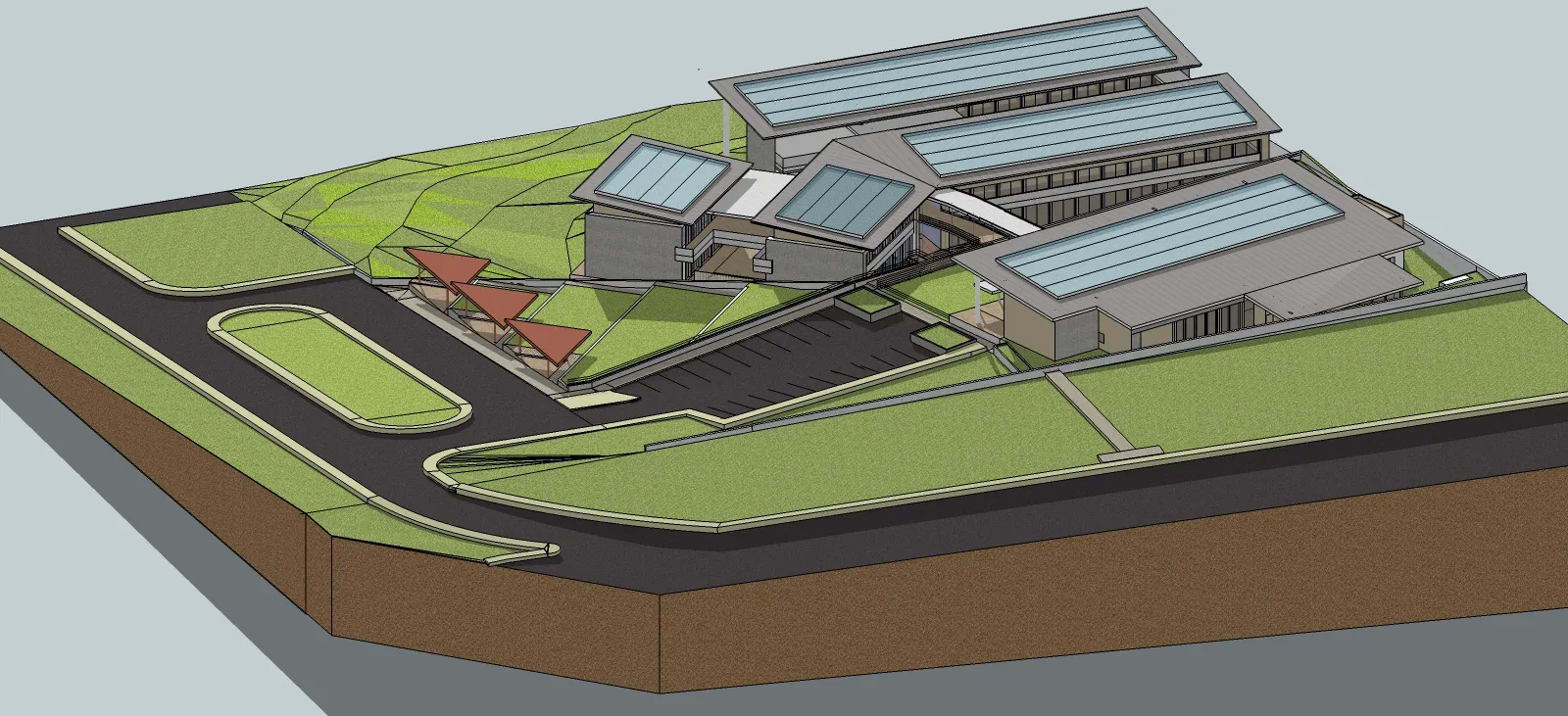
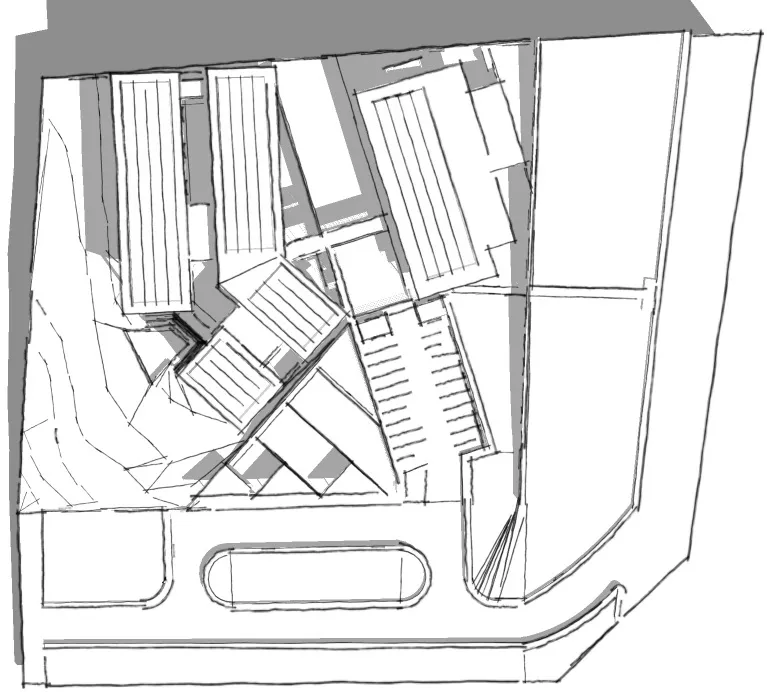
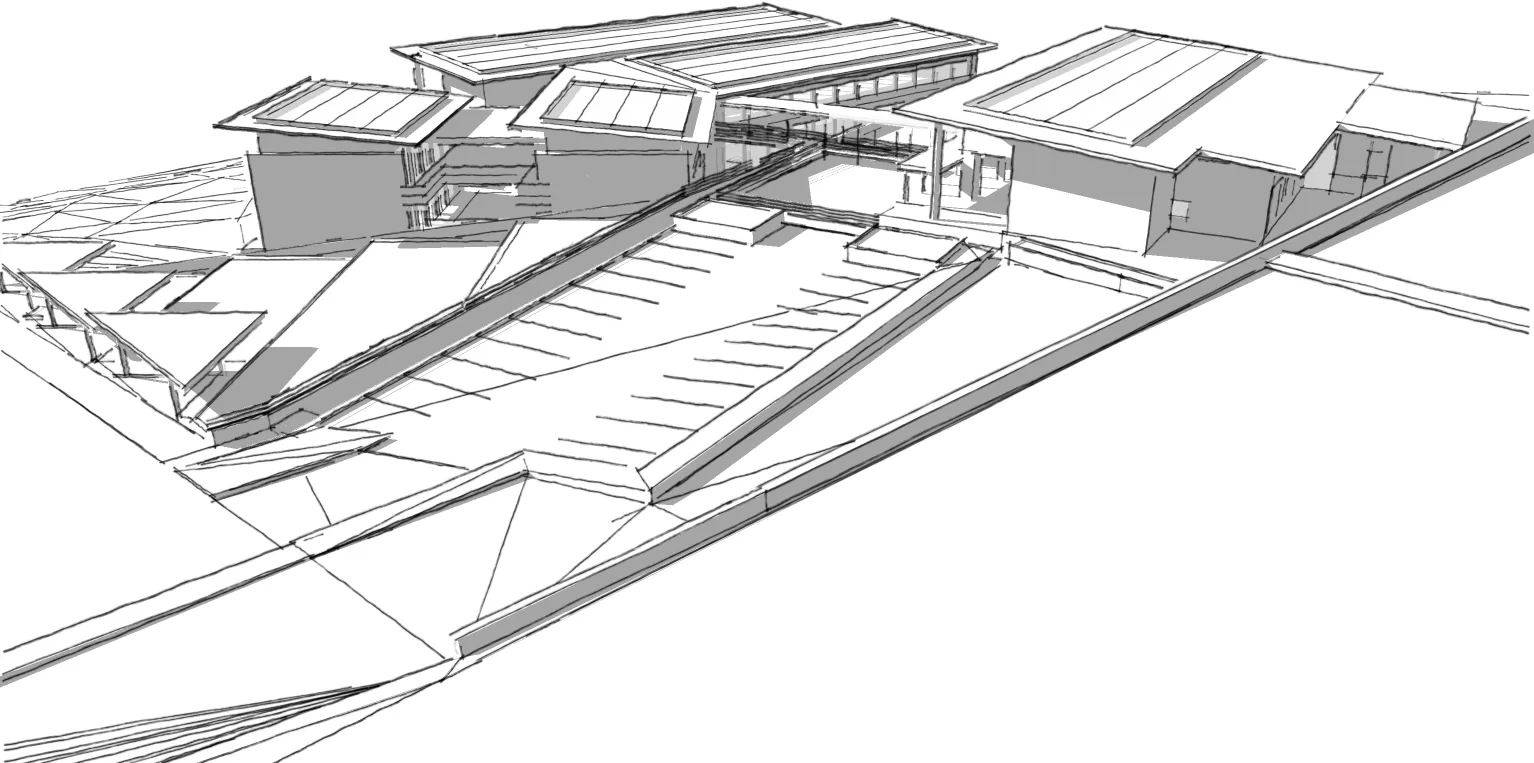
Another critical challenge was to have as many classrooms as possible but avoid the building being too compact and dense. Some strategies adopted include breaking the mass into blocks (Primary Courtyards – for Social Interaction and ventilation through stack effect, the building width was designed not to exceed 13 meters to create adequate day lighting.
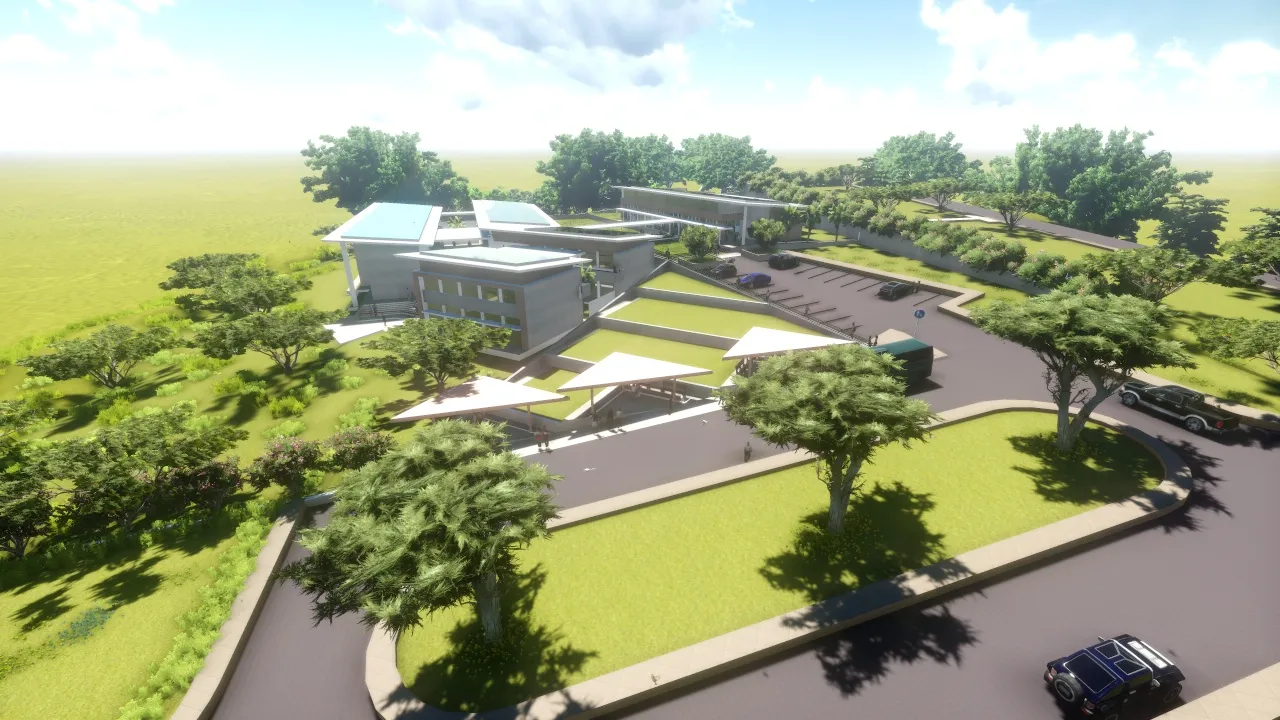
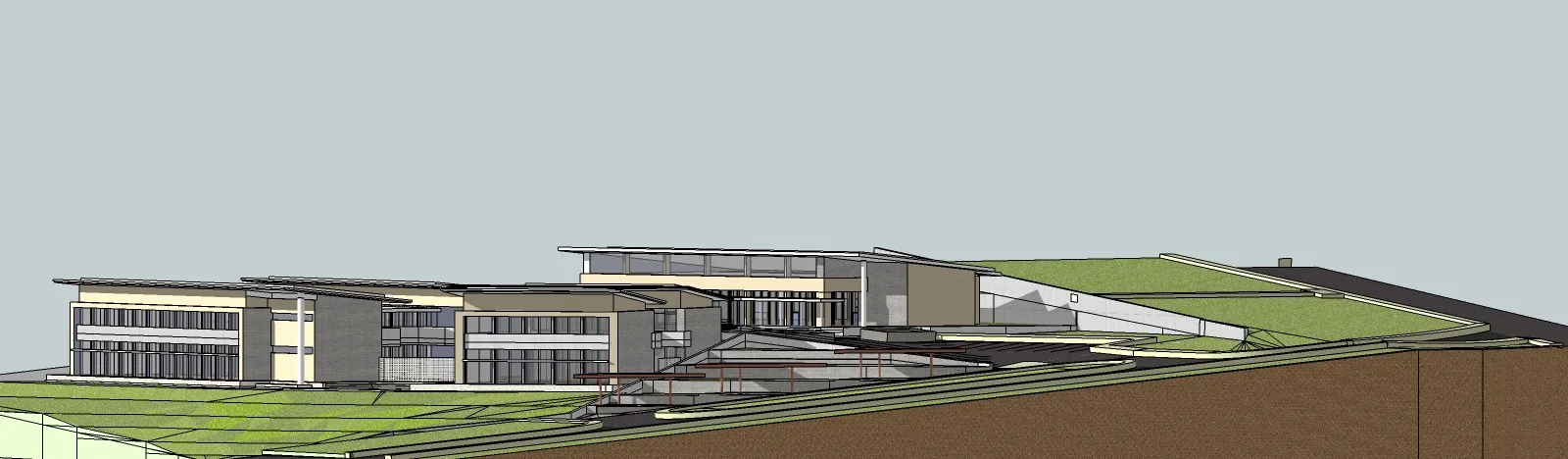
A major challenge in the nature of the site form was inspired by the slope of the site. DesignGene had to adopt terracing of Steep Slopes to reduce speed of Runoff, the building designed to run along the slope instead of across.
In other to boost the Aesthetics of the structure, the use of calcium silicate board with shades of grey and beige colour, is considered for the exterior clads to ensure 100% non-combustible nature, fire proof, waterproof, Moisture proof, Heat insulation and Sound insulation contents.
Part of the sustainability principles adopted includes: Deep roof overhangs to provide shade and roof top for supply energy to offices, to power pumps for water circulation, emergency lighting, street lighting nightlights etc. Creation of courtyard to enhance stack effect and provide shade. Aluminum louvres to act as sun breakers, recessed windows for solar shading, environmental Responsiveness. Water management by sloping water flow north for reuse within the facility underground water storage for vegetable & rainwater collection, adequate landscaping using trees and shrubs act as buffer against the noise from the road and to provide shade. Social responsiveness, durability, phased Construction.
EDUCATIONAL CENTER, ABIA STATE
Internally the partitions will be Board Plasterboard (due to its adaptable for fixing), which are manufactured from a combination of natural gypsum, and cardboard, recycled waste papers materials and recycled paper waste. The materials can now be reclaimed and recycled into new plasterboard, or reused as soil conditioner within the soil. Part of the benefits from using this is that it offers the benefits of low embodied energy, noise reduction enhanced indoor air quality, and ease of finishing without harmful finishing materials.
Following energy saving was the reason recommended for this project. For the wet areas we have recommended the use of pop plaster to allow for a cool interior due to the hot weather and “green” point which is VOC free, benefits include its near complete decomposition, extreme workability, excellent resistance, and high coverage rate reducing painting wall and maintaining yourself. It does not also harm man or the atmosphere.
Also, in minimizing the echoes, the ceiling are made of the combination of plasterboards and wooden ceiling complemented by wooden wall panels. The wood materials are of bamboo panels, the main species instead of cross boards.
Ceramic tiles are also recommended as the floor finish. Moreover, ceramic tiles are durable (they last more when compared to other building materials) and they are made of natural non-combustible components (clay). They are also moisture resistant of some plastics, carpet floors and some wooden finishes, ceramic tiles are also very hygienic and easy to clean (absorption levels are almost zero!)